
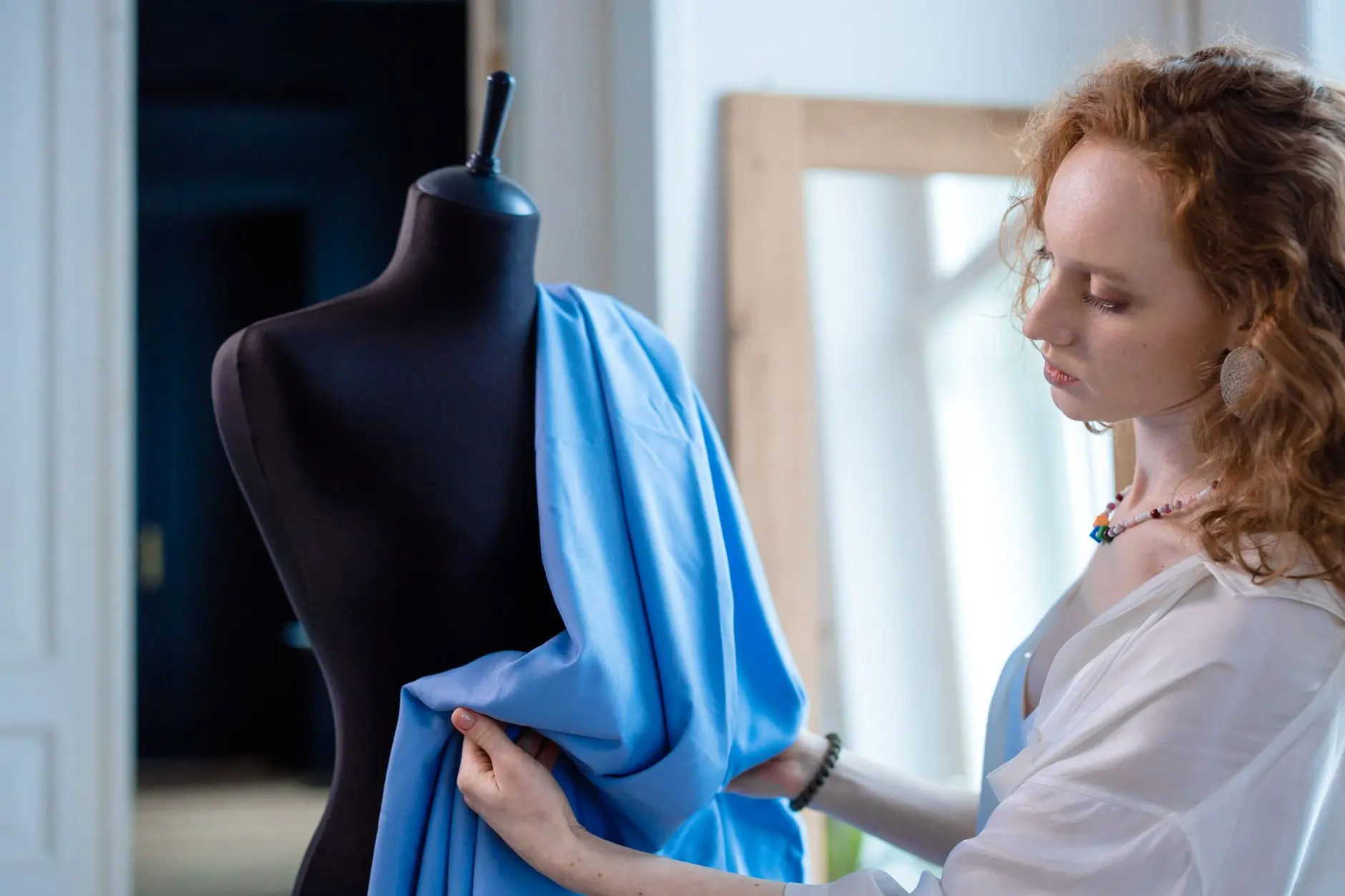
Few fashion words are used as loosely. People say haute couture for an evening gown, a sharp suit, sometimes a handbag. In France, though, the term is a protected name, governed by a 1945 text and granted every year by the State to a very small circle of Paris houses. Here is what the status covers, how a house earns it, who holds it today and why leather has a discreet but real place in it.
Haute couture: the official definition
The definition fits in one sentence. Haute couture is the creation of original designs, conceived by a house’s creative director and made by hand, to measure, in its own Paris ateliers, for private clients. That sets it apart from ready-to-wear, even luxury ready-to-wear, which is produced in series in standard sizes.
What makes it unique is its legal status. The names « Haute Couture », « Grand Couturier » and « Couture Création » may only be used by houses that hold official accreditation. It is granted each year by the minister in charge of Industry, under a decree of 23 January 1945 detailed by an order of 6 April 1945. The intangible cultural heritage inventory sheet published by the French Ministry of Culture describes it as a French invention, a practice with no equivalent elsewhere.
As a result, a piece made by hand and to measure is not automatically entitled to the name. A tailor, a workshop making made-to-measure leather jumpsuits or an independent designer can reach remarkable standards of execution without being able to claim the label, which belongs to accredited houses only.
The rules of the label
The conditions are set by the 1945 texts and by the internal rules of the Commission de Contrôle et de Classement « Couture Création », reformed in 2001 to make accreditation more accessible without lowering the bar. According to the Ministry of Culture, a house must meet several cumulative criteria.
- Design. Original designs are created exclusively by the house’s permanent designer.
- Ateliers. The house has at least one production atelier and one presentation salon, and its ateliers employ at least twenty people working on the collection.
- Made to measure. Every piece ordered is made to the client’s measurements, with at least one or two fittings on her or on a dress form built to her measurements.
- Calendar. The house has been on the official Haute Couture Week calendar for at least four seasons.
- Shows. It presents in Paris, every spring-summer and autumn-winter season, a collection of at least twenty-five looks, with day and evening pieces.
Compliance may be checked by inspectors appointed by the commission. The commission brings together houses and qualified experts, with a representative of the minister of Industry sitting by right, and its members serve renewable three-year terms. The accreditation itself is a ministerial decision.
Accredited houses, correspondent members and guests
Three categories of houses show during Haute Couture Week, organised twice a year in Paris, in late January and early July, by the Fédération de la Haute Couture et de la Mode.
Accredited houses
They are the only ones legally entitled to the name. The Ministry of Culture’s sheet, written at the end of 2025, lists thirteen:
| Accredited houses named by the Ministry of Culture |
|---|
| Adeline André |
| Alexis Mabille |
| Chanel |
| Christian Dior Couture |
| Franck Sorbier |
| Giambattista Valli |
| Givenchy |
| Jean Paul Gaultier |
| Julien Fournié |
| Maison Margiela |
| Rabih Kayrouz |
| Schiaparelli |
| Stéphane Rolland |
The list changes, reviewed every year as houses evolve. Maison Margiela, for instance, was accredited in 2012 after several seasons as a guest member. For the exact line-up of a given season, the list published by the Fédération is the one to check.
Correspondent members
These are international houses whose creativity and craftsmanship are considered equivalent, but whose ateliers are not based in France. The same sheet counts seven: Elie Saab, Giorgio Armani, Iris van Herpen, Fendi Couture, Valentino, Versace and Viktor & Rolf. The status dates from 1996.
Guest houses
French or foreign, they are selected each season by the Haute Couture Committee, which meets twice a year and looks at creativity, technical innovation, craftsmanship and the strength of the project. Created in 1997, the status has revealed a generation of designers, from Robert Wun to Imane Ayissi and Kevin Germanier. Correspondent members and guests show on the official calendar but do not hold the accreditation. In 2025, 55% of the brands on the official calendar were foreign, a sign of how strongly the Paris stage still attracts designers.
The origins of Paris couture
The discipline’s birth is symbolically dated to 1858. That year Charles Frederick Worth, an Englishman settled in Paris, opened a house at 7, rue de la Paix with Otto Gustav Bobergh. For the first time, a couturier no longer simply executed the design chosen by his client. He imposed his own vision, designed the garment from cut to finish, introduced the idea of a collection and showed his creations on live models, the forerunners of today’s runway models.
The key milestones followed.
- 1868: founding of the trade chamber that organised the profession.
- 1911: reorganisation as the Chambre syndicale de la couture parisienne.
- 1927: founding of the chamber’s school, merged in 2019 into the Institut Français de la Mode.
- 1945: decree of 23 January and order of 6 April, which create the regulatory framework still in force.
- 1973: creation of the Fédération française de la couture, du prêt-à-porter des couturiers et des créateurs de mode.
- 2017: the federation takes its current name, Fédération de la Haute Couture et de la Mode.
Between these dates came a golden age led by Jacques Doucet and Paul Poiret, then Lanvin, Vionnet, Patou, Chanel and Schiaparelli, followed by the post-war revival with Christian Dior. The story never stopped. Balenciaga, whose couture ateliers had closed in the late 1960s, announced its return in January 2020 and presented a first collection in July 2021.
Inside the ateliers: flou, tailleur and the petites mains
An accredited house works around two complementary specialities. The flou atelier handles soft, fluid materials, evening gowns, drapes, chiffons, where the fabric leads the hand. The tailleur atelier builds structured garments, jackets, coats, skirts and trousers, with a cut set from the start to sculpt the body. Ateliers can bring together up to around forty people, and historic houses have several of them.
The hierarchy is precise. The première d’atelier receives the creative director’s sketches and oversees the whole. The premières mains make the pieces, supported by seconds d’atelier, pattern makers who turn the drawing into a pattern, and toilistes who build the calico prototypes. These titles are used in the feminine in French, reflecting a largely female practice. Passing on these skills is closely watched. A specialisation certificate dedicated to the core techniques of a première main was created by an order of 29 August 2025, with a first intake in 2026.
Around the houses lies a network of allied crafts that the Ministry’s sheet describes at length: embroiderers, featherworkers, pleaters, milliners, corsetmakers, lacemakers, but also bootmakers and glovers. Chanel brought several of these workshops together at le19M, opened in 2021 in Aubervilliers, with Lesage and Atelier Montex for embroidery, Lemarié for featherwork, Ateliers Lognon for pleating and Desrues for costume jewellery. Each piece requires hundreds of hours of work, which explains the prices. Wikipédia mentions dresses selling for more than 100,000 euros.
Leather, a haute couture material
Haute couture first brings to mind silk, feathers and embroidery. Leather nonetheless has its place, through two doors. The first is the allied crafts. Bootmakers and glovers are among the skills associated with the houses, and the bootmaker Massaro has been part of Chanel since 2002. The second is the tailleur atelier, where the rigour of the cut suits a skin that forgives no pattern-making error, as the history of the perfecto jacket shows, from biker gear to the couturiers’ runways.
The strongest signal came in February 2025. Hermès, a house born of saddlery, announced its intention to enter haute couture around 2026-2027, putting its leather expertise forward. The Ministry of Culture’s sheet sees it as a return to roots, the house renewing a former membership of the trade chamber. To follow how skins make their way onto the Paris runways, our review of Paris Fashion Week spring-summer 2027 covers the season’s standout pieces.
Leather raises the same questions in the ateliers as the most demanding fabrics: choice of skin, thickness, suppleness, how it holds over time. Stretch leathers have opened new possibilities for close-fitting cuts, a technique explained in our article on stretch leather.
Haute couture and ready-to-wear, the differences
The two worlds often coexist within the same houses, but they follow opposite logics.
| Criterion | Haute couture | Ready-to-wear |
|---|---|---|
| Status | Protected name, yearly accreditation | Free, no accreditation |
| Production | Handmade piece to the client’s measurements | Series in standard sizes |
| Place | The house’s ateliers in Paris | Workshops and factories, in France or elsewhere |
| Fittings | At least one or two on the client | None |
| Presentation | Two shows a year on the official calendar, late January and early July | Ready-to-wear fashion weeks |
| Clients | Private, received in the house’s salon | General public, in stores |
Haute couture also works as a laboratory. The Ministry’s sheet notes that it inspires luxury ready-to-wear, then ready-to-wear, and feeds other fields such as leather goods, fragrance and beauty. It even gave birth to ready-to-wear itself, which appeared in 1925 in its wake according to the same timeline.
Key takeaways
A house does not declare itself a couture house, it becomes one by decision of the State, at the end of a demanding path: an atelier of at least twenty people, fittings for every client, four seasons on the calendar and twenty-five looks at every show. Behind these rules lies a heritage of skills that France protects, from the premières mains to the bootmakers. To explore other sides of atelier work, the Couture section gathers our articles on the subject.