
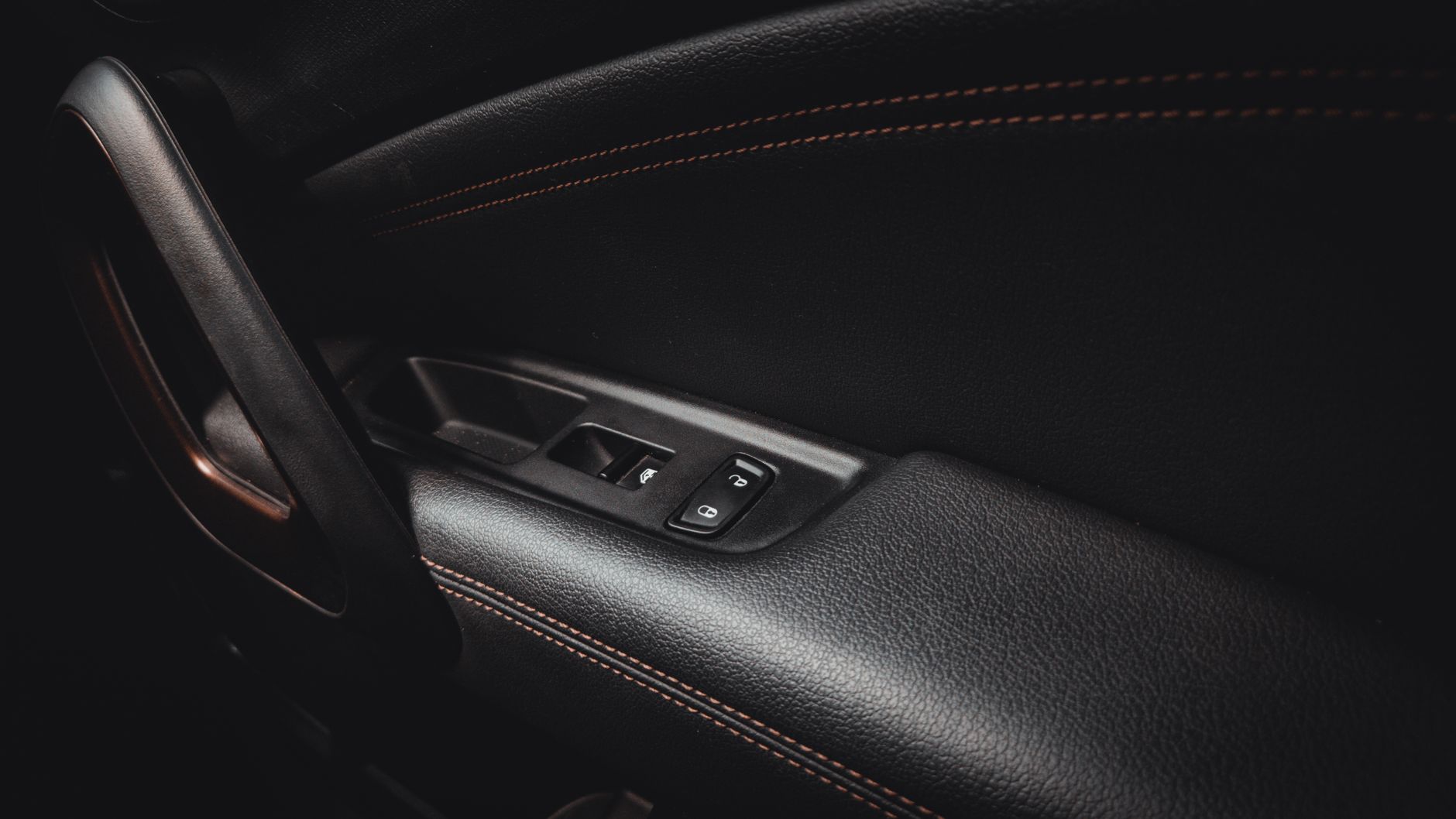
Nappa leather is a leather tanned to stay smooth, soft and easy to work with, widely used in cars, leather goods and clothing. The name often puzzles people: it does not refer to any animal species or to a single tanning method, but to a finishing method popularised more than a century ago. Here, in our Leather section, is what this name really covers, where it comes from, and what explains its softness.
At a glance
| Criterion | Nappa | Classic full-grain | Split leather |
|---|---|---|---|
| Source hide | Lamb, calf, goat | Cowhide, calf | Any split hide |
| Common tanning | Chrome | Vegetable or chrome | Chrome |
| Surface look | Smooth, muted grain | More marked grain | Reconstituted or printed grain |
| Softness | High | Medium to high | Variable, depends on thickness |
| Common uses | Car interiors, leather goods, clothing | Footwear, belts, leather goods | Linings, budget small leather goods |
Nappa Leather: Definition and Origin of the Name
This leather belongs to the full-grain family: the outer layer of the hide, the densest one, stays in place, without the sanding used for nubuck leather. What sets it apart is the care taken over the tanning and finishing to achieve a particularly smooth surface and a high degree of softness, with a discreet rather than a marked grain.
The name comes from the city of Napa, in California. Several sources, including the English-language Wikipedia article, credit the starting point of the process to Emanuel Manasse, a tanner of German origin employed by the Sawyer Tanning Company, around 1875. The exact details of his original tanning vary between accounts, some mentioning vegetable agents and alum salts, others an already mineral tanning. This uncertainty over the early history has not stopped the name from becoming established since then, in English (“napa”) as in French (“nappa”), to describe the same family of finishes, well before the word became a common marketing argument on product pages.
The Tanning That Explains the Softness
This leather’s softness comes first from its tanning, chrome tanning in most of today’s production. In this process, the hide, stripped of hair and epidermis, is placed in a bath of chrome salts, which bonds to the collagen fibres and stabilises them within a few hours, where vegetable tanning takes several weeks of soaking in tannin baths. The result is a more pliable, more stable material, which keeps its shape without stiffening over time, resists moisture better and takes bright dyes more easily.
After tanning comes a step that is essential for the final softness: milling, which mechanically softens the hide, and fatliquoring, where fats are worked into the fibres so that they slide against each other rather than locking up. This step, as much as the choice of tanning, gives this hide its particularly soft hand, noticeable as soon as it is flexed between the fingers.
Vegetable tanning, by contrast, produces a leather that patinas and stiffens more over time, sought after for other uses, such as small leather goods or the kind of leatherworking craft that ages beautifully rather than staying stable.
The grain stays worked but not sacrificed: it is neither sanded deeply, as with a nubuck, nor hidden under a printed texture, as with some budget split leathers. This choice keeps the hide’s natural density while softening its surface, which explains both its durability and its particularly soft touch.
The Hides Used: Lamb, Calf, Goat
This finish suits fine, soft hides best. Lamb remains the most often cited material, for its fineness and lightness, followed by calf and goat, each bringing a slightly different hand: calf gives a more even, firmer surface, goat a livelier grain and good tear resistance despite its thinness. Thicker hides, such as cowhide, do not take this finish as easily and are more often kept for classic full-grain leather or pebbled leather.
This choice of fine hides explains why the material shows up as much in clothing, where lightness matters, as in car interiors, where softness makes it easier to shape seats and panels.
Genuine Leather or Faux: How Not to Get Confused
The word also circulates on materials that are not leather at all. Some ranges of faux leather or so-called “vegan” leather reuse the name to describe a plastic or coated textile surface, smooth and soft like this material, but made from polyurethane or other synthetic materials. Nothing stops this use of the word, but it is no longer a tanned animal hide.
A simple check helps tell them apart. A tanned hide keeps a characteristic leather smell and fine irregularities, even softened by the finish, while a faux leather smells of plastic and shows a perfectly repetitive surface, with no variation from one piece to another. The composition label remains the most reliable source: it must mention an animal hide for it to be a genuine leather, nappa or otherwise.
Where This Material Is Used
Car interiors remain one of the most visible fields for this material: seats, armrests and door panels benefit from its softness and its resistance to repeated use. In leather goods, it serves large bags as well as small leather goods, a craft our profile of the leather goods maker covers piece by piece.
Clothing uses it for jackets, coats or trousers that call for a material close to the body, less stiff than a classic full-grain leather. Gloves benefit from the same softness, as does some upholstery, where a soft touch is preferred over a marked grain.
Available Colours and Finishes
This material takes a wide range of colours, from classic black to brighter shades, through to browns, beiges or greys for more understated uses. Dyeing is most often done throughout the hide or on the surface, with matte, lightly satin or, more rarely, pearly finishes for dressier clothing pieces.
Some versions are perforated, a pattern of small holes spread across the surface, mostly in car interiors, to let air through a seat cushion or backrest and reduce the feeling of heat in summer. Others stay plain and smooth, suited to small leather goods or clothing, where a continuous, even surface is wanted above all.
Thickness also varies with the use: a thin hide suits a glove or a lining, a slightly thicker hide holds up better to the repeated pressure of a car seat or the daily wear of a bag.
What the Word “Nappa” Does Not Guarantee
“Nappa” is not a category covered by a single standard: it is above all a finish name, sometimes repeated as a simple marketing argument on a product page. Two pieces sold under this name can therefore come from different hides and have received different tanning methods. Before buying, it is best to check with the brand or tannery which hide was actually used and which tanning method, rather than stopping at the word alone.
Caring for Nappa Leather
This smooth material needs only simple care, as long as it stays regular. A soft, dry cloth is enough to dust the surface day to day. For a stain or heavier soiling, a cleaning product made for smooth leather, applied sparingly, avoids damaging the finish. Avoid soaking the piece or rubbing it with too much water, which can dull the grain and leave water marks.
A nourishing protector, applied from time to time, keeps the hide supple and delays cracking, especially on a car seat exposed to sunlight or a clothing piece worn often. Prolonged exposure to direct sunlight remains this material’s main enemy: it dries out the grain faster than a simple spell outdoors, and bright shades are more sensitive to it than black or dark browns.
A perforated piece, common in car interiors, needs particular care: dust and fine particles settle into the perforations, and a vacuum fitted with a soft brush, run before any liquid cleaning, avoids working them in further. The detailed steps for each type of leather are gathered in our Care section.
What to Remember
- It is a full-grain leather tanned to stay smooth and soft, without sanding or a strongly marked grain.
- The name comes from the city of Napa, in California, and is usually traced back to the tanner Emanuel Manasse, around 1875.
- Its softness comes from the tanning, chrome tanning in most cases, and from fine hides such as lamb, calf or goat.
- It is found mostly in car interiors, leather goods, clothing and gloves.
- The word is also a marketing argument with no official grading: checking the actual hide and tanning remains the safest approach.