Nubuck is often taken for a slightly smarter suede. That is a mistake about the material, not about vocabulary. This velvety leather is a full-grain hide whose outer face has been sanded, whereas suede is worked on the other side. That difference decides everything, from the hand to durability to the way you care for it.
Nubuck, a sanded grain
A tanned hide has two faces. On the outside is the grain, the layer that carried the animal’s hair, made of very tight fibres. On the inside is the flesh side, looser and more fibrous. When the hide is thick, the tannery can split it into two sheets in between. The lower sheet is called the split.
To make this leather, the grain is kept and sanded. A pass of very fine abrasive opens the surface and raises an extremely short nap of fibres. The grain pattern remains readable under the velvet, you can make it out by tilting the piece to the light. The hand recalls a peach skin far more than a rug.
It is a finishing process, not an animal species. Any full-grain hide that is regular enough can take this finish, provided it has no flaws that sanding would reveal rather than hide. To place this finish among the others, our Leather section covers the main families of hides and tannages.
Where the word comes from, and which animal
The name is thought to come from new buck, a nod to the young deer hides used at first. The term then widened to leathers worked the same way from other species.
Today the vast majority of these leathers are bovine, cowhide or calfskin. Calf gives a finer, more even nap, cowhide a thicker, sturdier piece suited to walking boots. The word therefore guarantees nothing about the animal, only about the face that was worked.
Nubuck or suede, the real difference
Suede is leather whose flesh side has been brushed or sanded, or a split treated the same way. Nubuck is worked on the grain side.
| Criterion | Sanded grain (nubuck) | Suede |
|---|---|---|
| Face worked | grain, outer face | flesh, inner face, or split |
| Nap | very short, tight, peach-skin effect | longer, fibres that lie down |
| Hide grain | still visible in raking light | absent |
| Strength | high, the dense grain stays in place | lower, looser fibres |
| Price | usually higher | usually lower |
The practical consequence is simple. Because it keeps the densest layer of the hide, this leather resists wear and tearing better than suede. It is also more costly to produce, since it needs good-quality grain, while suede can make use of a split.
The most reliable test is a single gesture. Run a finger against the nap. On suede the fibres lie down and leave a clear, darker mark. On a sanded grain the mark is barely visible.
Spotting it in a shop
Labels do not always tell the truth, and trade names muddy the waters. “Suede”, “velour”, “nubuck-effect” sometimes circulate for the same piece. A few checks are enough to know what you are holding.
- Raking light. Tilt the piece under a lamp. If you can still make out the pore pattern under the nap, the grain is there.
- Nap length. A very short, almost imperceptible nap signals a sanded grain. Fibres you can pinch between two fingers give suede away.
- Edge and reverse. On a belt, a bag strap or a tongue, look at the edge. A compact top layer above looser fibres indicates full-grain leather.
- Body. At equal thickness, a sanded grain keeps more structure. Suede, especially split suede, slumps faster at the fold.
These pointers do not replace a cobbler’s or leatherworker’s opinion, but they keep you from paying grain prices for a suede split.
Where you find it, from boots to sofas
This leather has established itself wherever people want a matt, warm look together with real strength. Three families of objects account for most of it.
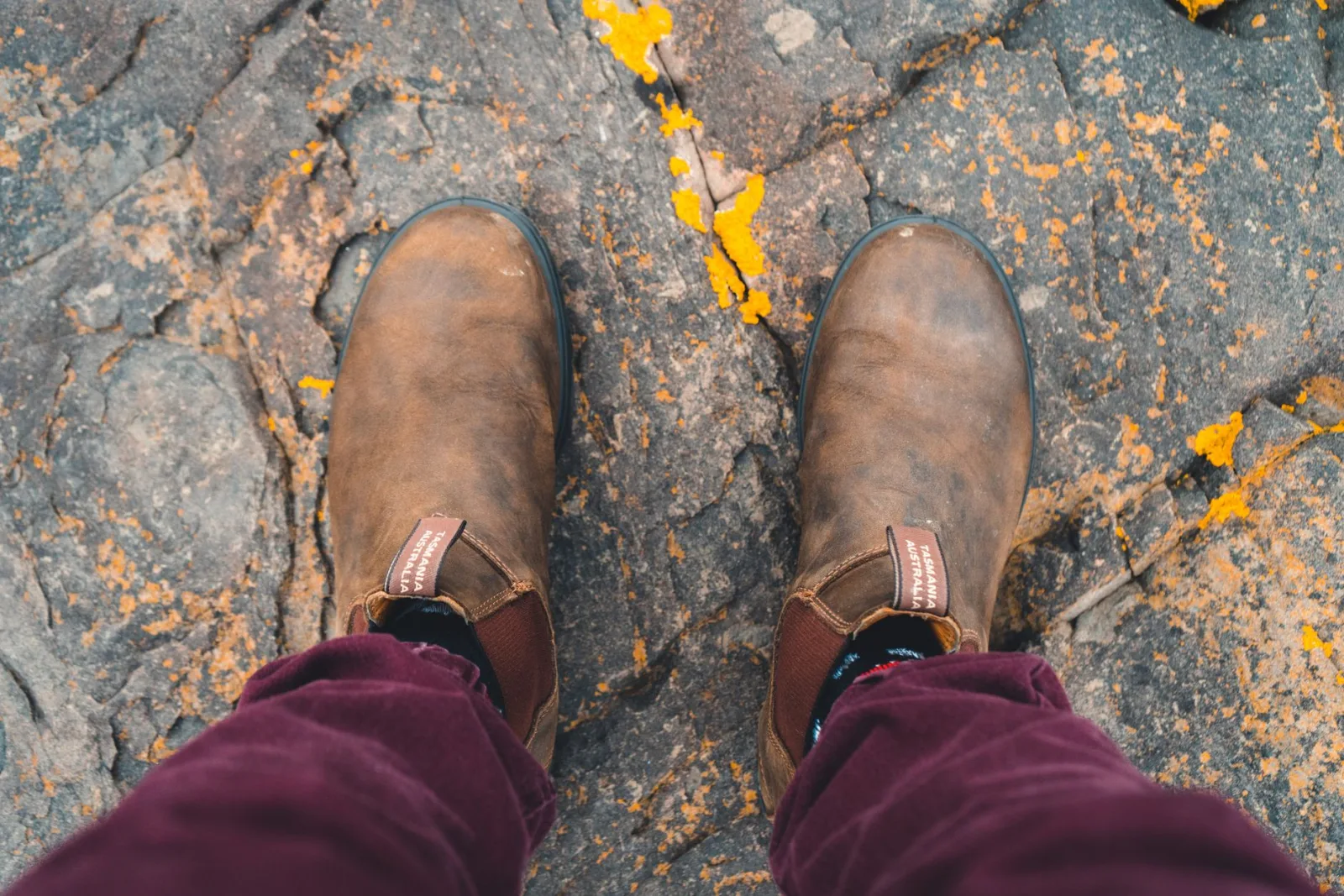
- Footwear, first, and above all walking shoes and ankle boots. The best-known example remains Timberland’s six-inch boot, which the brand still presents in its Wheat Nubuck colourway, the famous wheat yellow.
- Upholstery, armchairs and sofas, where its velvety hand replaces a fabric while keeping the nobility of leather.
- Leather goods, handbags and small leather goods, often paired with a smooth leather on the areas that rub.
In clothing you meet it on blousons and jackets, more rarely on close-fitting pieces. For those, workshops prefer fine lambskins or technical leathers such as stretch leather, designed to follow movement.
Its qualities, and its limits
This leather offers immediate comfort, a soft hand and a deep colour that sanding makes more matt and nuanced than a smooth leather. It ages well when cared for, taking on a light patina at the creases.
It also has trade-offs worth knowing before you buy.
- It stains easily. The open surface absorbs water, grease and coloured liquids.
- It marks with rubbing and scratches, like lightly protected aniline leathers.
- It dislikes direct light, which can fade shades over the months.
- It cannot be polished. Polish or rich cream clogs the fibres and leaves permanent shiny patches.
Caring for it properly
Caring for a sanded grain comes down to three gestures, adapted to how the piece is used.
- Brush dry, with a crepe brush or a soft brush, to remove dust and lift the nap. Always on a dry piece.
- Waterproof before first wear, then regularly, with a product made for napped leathers. It is the best protection against water rings.
- Treat stains early. A dry stain comes out with a special eraser for napped leathers. A greasy or ink stain is a job for a cobbler or leather specialist rather than a go with soapy water.
A wet piece dries flat or on a shoe tree, in open air, away from a radiator or hairdryer, then is brushed once dry. Our practical guides, gathered in the Care section, go through these gestures piece by piece.
Key takeaways
- This is a sanded full-grain leather, not an animal species nor a mere synonym for suede.
- Suede is worked on the flesh side or on a split, hence a longer nap and lower strength.
- Denser and more durable, it is also more prone to staining because of its open surface.
- Brush, waterproofing spray and eraser are enough, never polish.