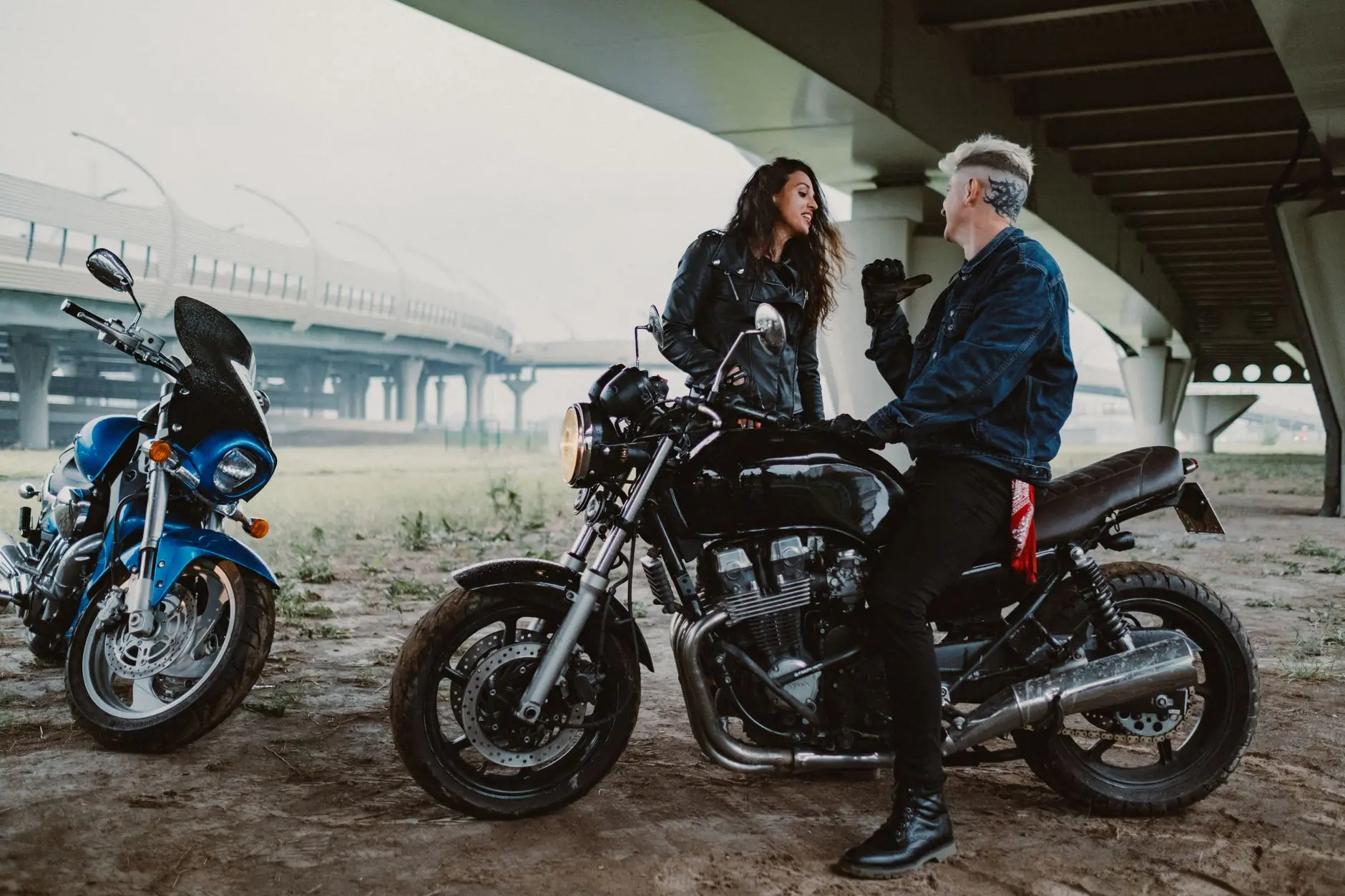
A black jacket, an angled zip, snaps on the collar. You can spot the silhouette from across the street, and yet the Perfecto jacket history begins in a basement on the Lower East Side, a long way from any runway. Before it became the rocker’s uniform and then a catwalk piece, it was riding gear thought through detail by detail. Following its journey explains why this cut has barely changed in almost a century.
A New York firm and a motorcycle jacket
It all starts with two brothers, Irving and Jack Schott, sons of Russian immigrants. In 1913 they opened a small workshop on Manhattan’s Lower East Side and cut raincoats that were sold door to door. The company was called Schott Bros. It would later become Schott NYC.
In 1928, Irving Schott designed the house’s first leather motorcycle jacket. The order came from Beck Distributors, a Harley-Davidson distributor on Long Island, which wanted a garment that would protect a rider in a fall. The jacket retailed for 5.50 dollars. Shortly afterwards, Irving launched a whole line of motorcycle jackets under a name that would travel the world.
Where the name Perfecto comes from
The name comes from a cigar. Irving Schott smoked Cuban cigars of the Perfecto shape, and that is the word he picked for his finest jackets. The house’s own account describes him with a cigar in his mouth at all times, whether with his salesmen or his suppliers.
One point of chronology is worth noting. The official story published on the house’s US website places in 1915 the moment Irving Schott gave this name to his top-of-the-line leather jackets, and in 1928 the birth of the first modern motorcycle jacket. Encyclopaedias mainly keep the second date. Both versions agree on the essentials, the offset-zip motorcycle jacket does date from the late 1920s. The house also states that in 1925 it became the first maker to put a zipper on a jacket, an innovation that paved the way for the offset zip.
Perfecto is still a registered trademark of Schott. In French, though, the word has become a common noun for any jacket of this cut, much as some brand names turn into everyday words. Strictly speaking, only the New York house’s models carry the name.
A cut dictated by the motorcycle
Nothing on the original model is decorative. Each element answers a constraint of the road, which explains its longevity.
- The offset zip. The zipper runs off-centre at the front. The two panels overlap and double the thickness of leather over the chest, where an impact is most likely.
- The snap-down collar. The lapels fold down and fasten so they do not flap in the rider’s face at full speed.
- The zipped cuffs. They close tight over the glove and stop air rushing up the sleeves.
- The belt. Cut from the same leather, it adjusts the jacket at the waist and holds it on the lower back when the rider leans over the handlebars.
- The short, close fit. It keeps the jacket from riding up or ballooning in the riding position.
The first jackets were cut only from horsehide, a dense hide that resists abrasion. Production then moved to steerhide and cowhide, and the current Schott range also offers lambskin and goatskin, without giving up horsehide. To place these hides in relation to one another, our Leather section sets out the main families of materials.
The One Star and the 618, two models turned legends
In the late 1940s, Schott introduced the 613, built on the original design. A chrome metal star is riveted on each shoulder epaulette, hence its nickname, the “One Star”. In the early 1950s came the 618, identical but without the stars, a simpler version to sell.
Both references are still made. The 613 and the 618 keep the narrow cut of the early years, shorter than most of today’s jackets, and remain the models enthusiasts mention first when they talk about the history of the house.
Brando, Dean and the black leather jacket
Cinema changed the jacket’s destiny. In 1953 The Wild One came out, with Marlon Brando as the leader of a motorcycle gang. His black jacket, with stars on the shoulders, became the very image of the young rebel. The house presents this jacket as a One Star, and clothing historians point out a nice costume detail, the stars and the collar snaps were fitted specially for the film.
The effect was immediate. Associated with gangs and dissent, the jacket was banned in many American and British schools. James Dean also helped fix the image, and in France the “blousons noirs” of the 1950s and 1960s took their nickname from it. The motorcycle jacket became the garment of a generation, well beyond motorcycle enthusiasts.
From punk to the runways, the move into couture
In the 1970s, punk took it over. At CBGB in New York, the jacket became the scene’s uniform. All four Ramones wear it on the cover of their debut album, and the Sex Pistols adopted it too, often customised with studs, chains, badges and paint. In the late 1970s and through the 1980s, Joan Jett carried it beyond menswear and inspired generations of women musicians. The jacket changed meaning without changing cut, moving from the road to the stage.
Fashion followed. In the 1980s, Jean Paul Gaultier was among the designers who offered their own variations on the biker jacket, with the taste for subversion that defines his signature. In 1991, photographer Peter Lindbergh shot a series for Vogue in which the star models of the time, Cindy Crawford, Linda Evangelista, Naomi Campbell, Claudia Schiffer and Helena Christensen, posed in leather jackets. The rocker’s piece entered the imagination of luxury.
Hedi Slimane then made it a pillar of his silhouette. In 2013, at the head of Saint Laurent, he brought the biker jacket into his collections and gave it a look that is both rock and highly constructed. Many houses have since offered their own version, in plunged lambskin, patent leather or stretch leather, a material that follows the body without losing the hold of leather, and whose making we explain in our article on stretch leather. To place their price today, see how much a luxury leather jacket costs, house by house.
Why the cut has held for almost a century
Schott keeps this memory alive itself. In 2003, for the model’s 75th anniversary, the house reissued the original 1928 D-pocket jacket in a limited edition. In 2008 a collaboration with designer Jeremy Scott reinterpreted the piece, and in 2018 the jacket celebrated its 90th birthday. Its centenary falls in 2028. Few garments cross so many decades with so few changes. The reason lies in its very construction, a functional piece in which every detail has a purpose, and which develops a patina instead of wearing out.
That consistency also explains its place in today’s wardrobes. Runways take it up season after season, as seen at Paris Fashion Week spring-summer 2027, where leather worked into jackets and blousons held a prominent place. A well-kept leather jacket lasts for decades, provided it is fed and stored properly, steps covered in our Care section.
Key dates in Perfecto history
| Year | Milestone |
|---|---|
| 1913 | Irving and Jack Schott open their workshop on the Lower East Side |
| 1915 | The Perfecto name is given to the house’s top leather range |
| 1928 | First motorcycle jacket, sold for 5.50 dollars on Long Island |
| Late 1940s | The 613, known as the One Star, with stars on the shoulders |
| Early 1950s | The 618, same cut without stars |
| 1953 | Marlon Brando in The Wild One |
| 1970s | New York punk, led by the Ramones, adopts it |
| 1991 | Peter Lindbergh series for Vogue with the star models |
| 2013 | Hedi Slimane takes it up at Saint Laurent |
| 2028 | Centenary of the first Schott motorcycle jacket |